41 drones · 12 brands · 25 under 250 g · ~$160–~$2,499 · updated September 2026
The most important number on a drone is its weight
Two hundred and fifty grams is where recreational flying stops being something you just do and starts being something you register, certify and broadcast. It is why half this catalog weighs exactly 249 g. Every drone here carries its takeoff weight, what that weight obliges you to do, how much sensor is actually behind the lens in square millimetres, and the conditions the maker measured its flight time under — which, it turns out, differ wildly from one box to the next.
- Lightest
- 35 gBetaFPV Cetus FPV Kit
- Biggest sensor
- 224.9 mm²DJI Mavic 4 Pro
- Longest claim
- 51 minDJI Mavic 4 Pro
- Cheapest
- ~$160BetaFPV Cetus FPV Kit
Every drone we track
Filter by weight — the 250-gram band is the one that decides whether you register with the FAA — then by sensor size, sensing and price. Tick up to three and the spec sheets line up side by side.
Must have
41 drones found · page 1 of 2
Tick the box on any card to compare up to three
Holy Stone
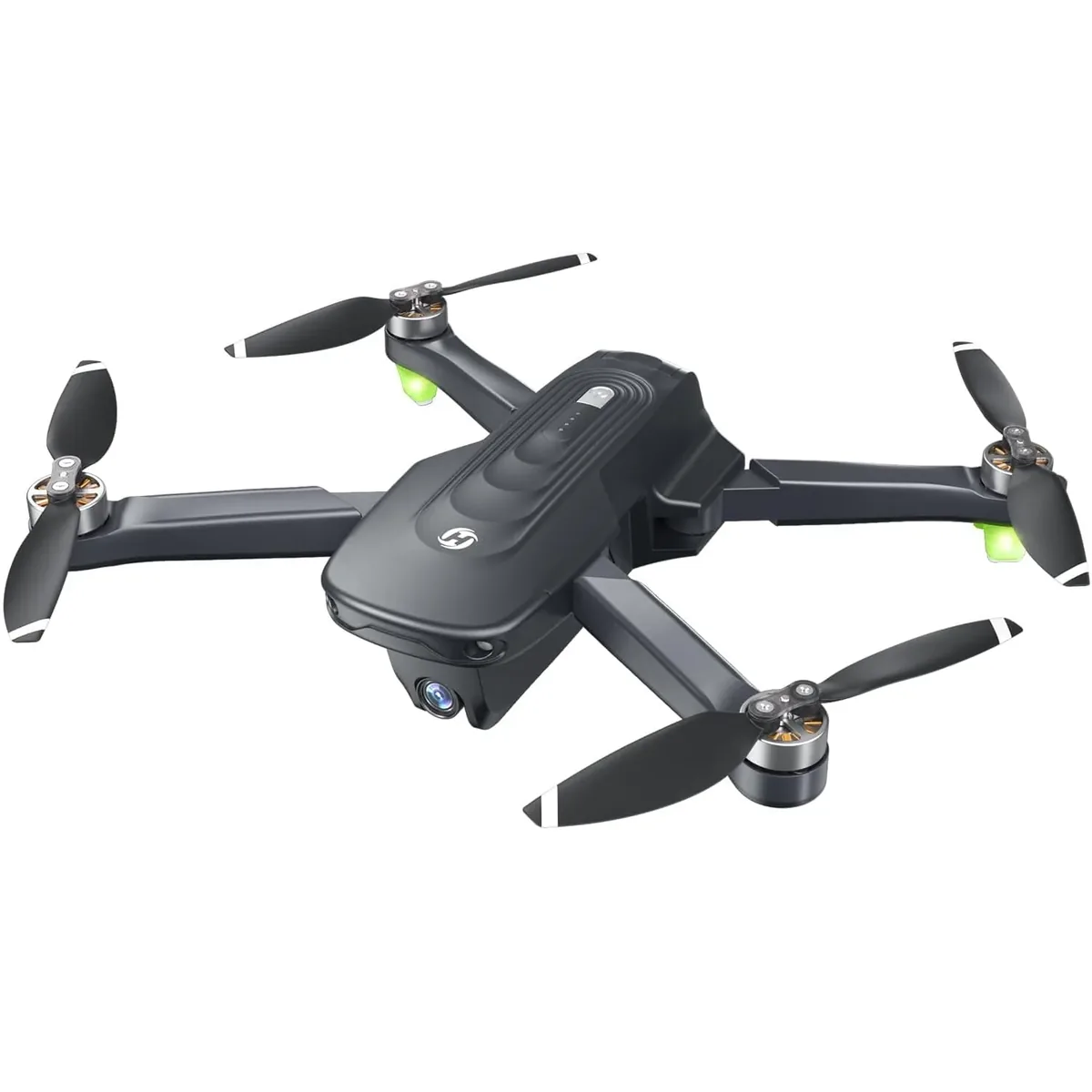
Holy Stone HS175D
Worth including mainly as a warning about how the word "4K" gets used at the bottom of this market. Holy Stone's listings put 4K on the box, and the aircraft will indeed produce a 4096x3072 still image — but video tops out at 2,688 by 1,512 at 25 frames per second, which is 2.7K, not 4K, and below 30fps. Everything else is what $170 buys in 2026: brushless motors, GPS hold, return-to-home, a 90-degree manually adjustable lens with no gimbal at all, and about a kilometre of range. Two batteries come in the box, which is where the advertised 46 minutes comes from. At 215 grams it stays under the registration line, and as a genuinely cheap way to learn stick control outdoors, it still works.
- Sensor
- 17.3 mm²
- Claimed
- 23 min
- Base kit
- ~$170
Best for: The cheapest way to learn stick control outdoors
Full spec sheet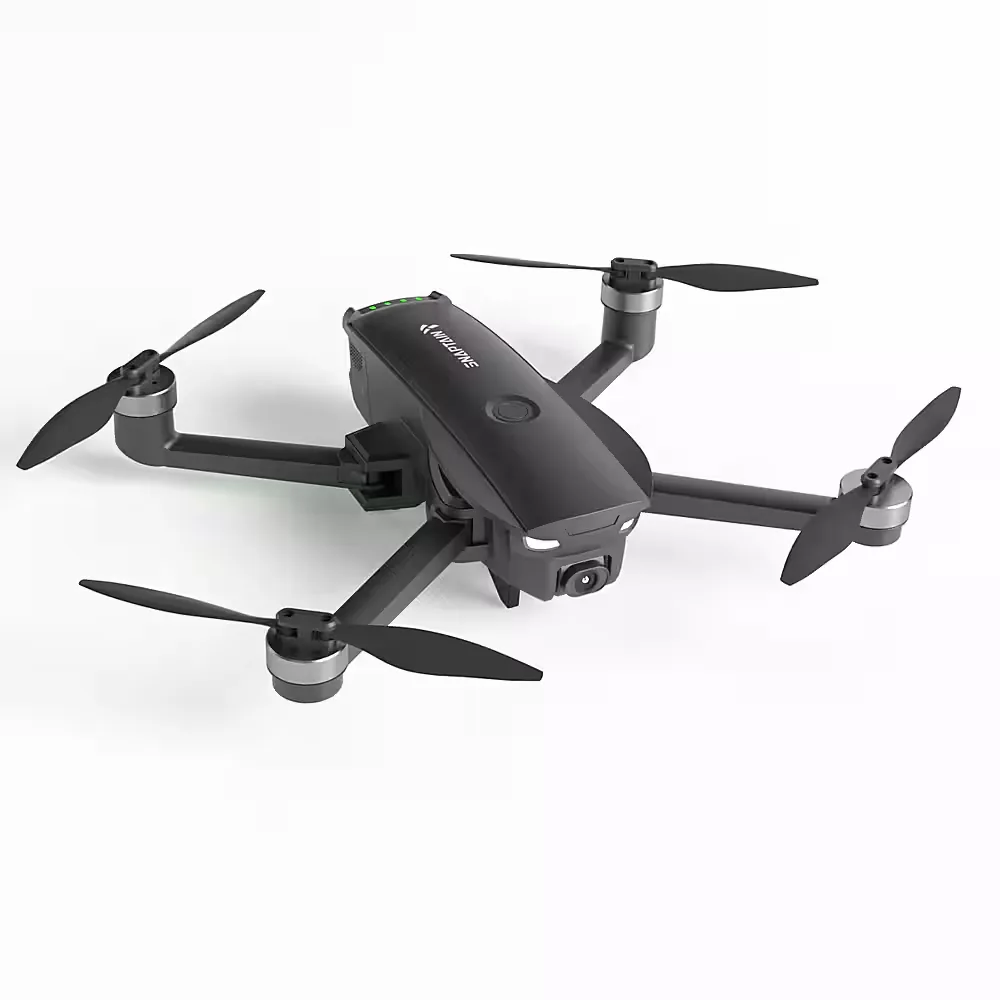
Snaptain
Snaptain SP7100
Here is the clearest example in the catalog of why frame rate belongs on a spec sheet next to resolution. Snaptain's SP7100 records 3,840 by 2,160 — genuinely 4K — at fifteen frames per second. Fifteen. Panning produces a slideshow, and there is no gimbal, only a rubber shock mount and a camera you can tilt through 90 degrees from the controller. GPS, brushless motors, return-to-home and a foldable airframe are all present and work as advertised. At 500 grams it needs registration, TRUST and a Remote ID answer that the maker does not give. It is in this catalog so that a shopper comparing "4K drones under $200" can see what the frame rate column does to that comparison.
- Sensor
- 17.3 mm²
- Claimed
- 26 min
- Base kit
- ~$200
Best for: Seeing what a 4K spec omits
Full spec sheet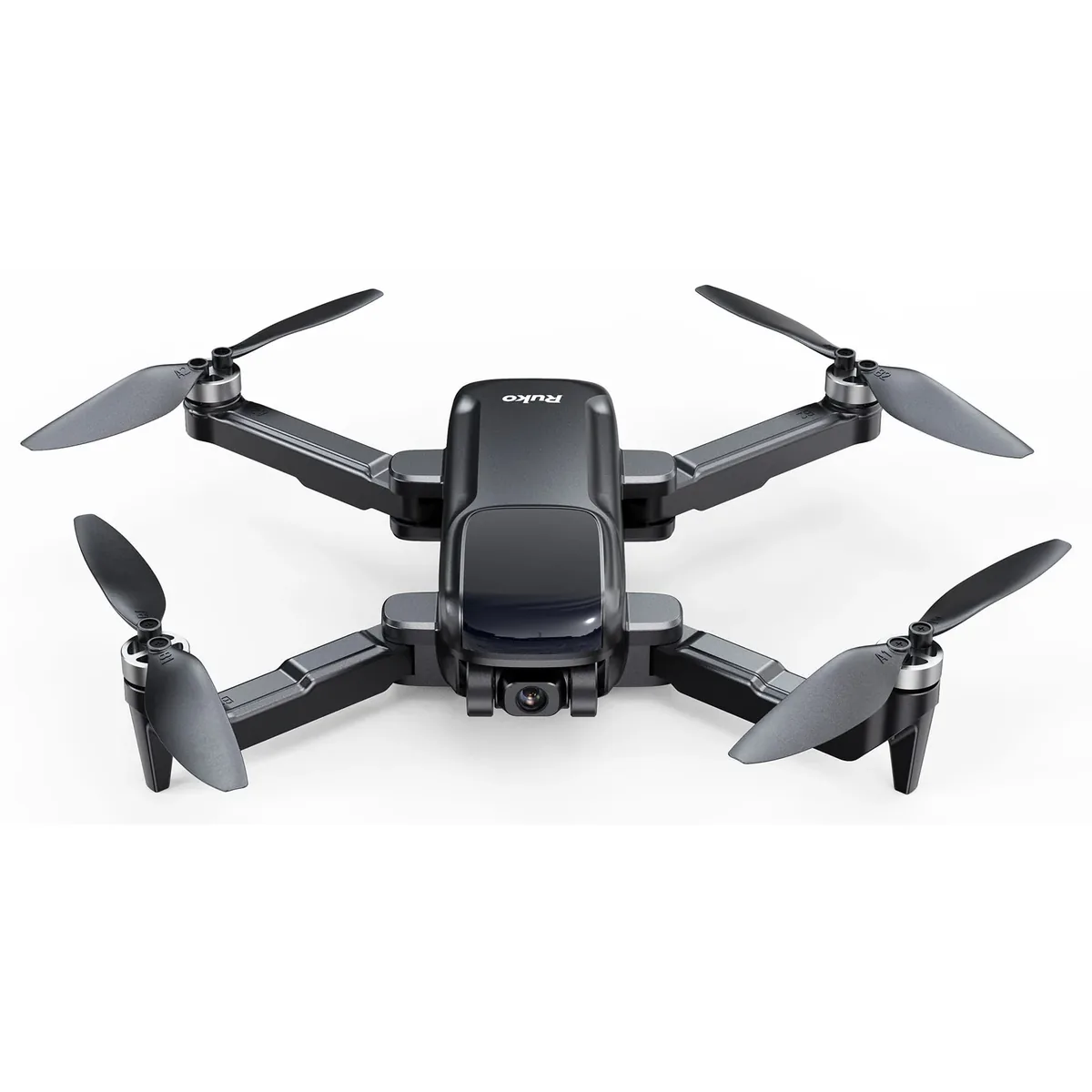
Ruko
Ruko U11 Pro
Aimed squarely at somebody buying their first drone as a gift, and priced like it. GPS hold, automatic return-to-home, indoor and outdoor modes, waypoint flying and two batteries for around $230. What it does not have is a gimbal, and the 500-metre control range is short even by budget standards — that is a park, not a landscape. At 270 grams it lands just over the registration threshold, which is a genuinely annoying place to be: you pay the $5, take TRUST and need a Remote ID answer, for an aircraft 21 grams heavier than the ones that need none of it. If the weight is the only thing between you and a licence-free flight, several drones in this catalog do the same job under 249 grams.
- Sensor
- 17.3 mm²
- Claimed
- 26 min
- Base kit
- ~$230
Best for: A first drone bought as a gift
Full spec sheet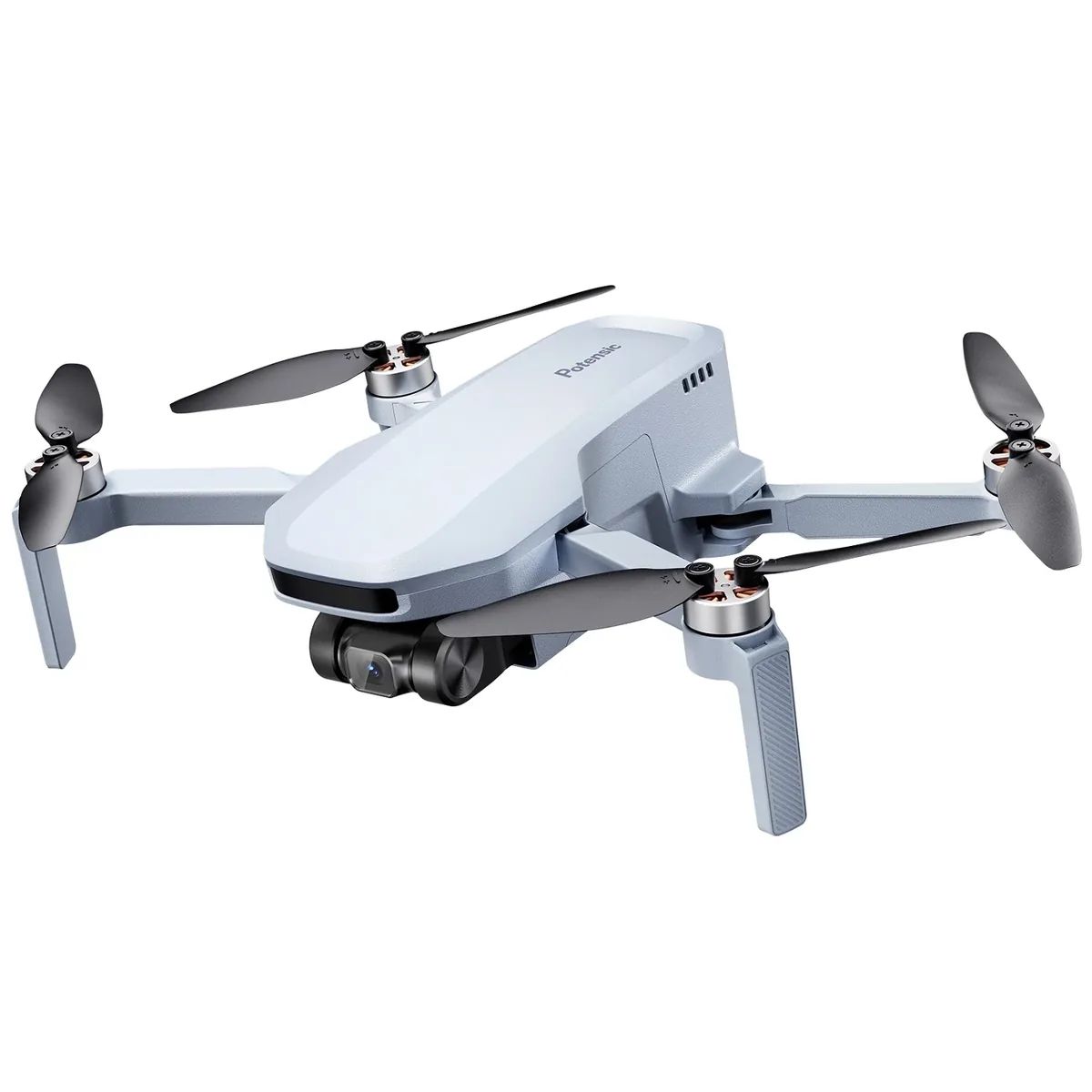
Potensic
Potensic Atom SE
Electronic stabilisation, a 1/3-inch sensor and a brushless motor on every arm — that combination, at this price, is what made the Atom SE the default "first GPS drone" recommendation for a couple of years. It holds position on GPS, comes home on a low battery, flies at 16 m/s in Sport mode and records 4K/30 that looks fine on a phone and soft on anything bigger. There is no gimbal, so smoothness depends on software cropping and on you flying gently. The specification to read carefully is the flight time: Potensic's own figure is 31 minutes for one battery, while retail listings routinely headline "62 minutes", which is two batteries added together and not something any single flight will ever deliver.
- Sensor
- 17.3 mm²
- Claimed
- 31 min
- Bundle
- ~$299
Best for: A first GPS drone under $250
Full spec sheet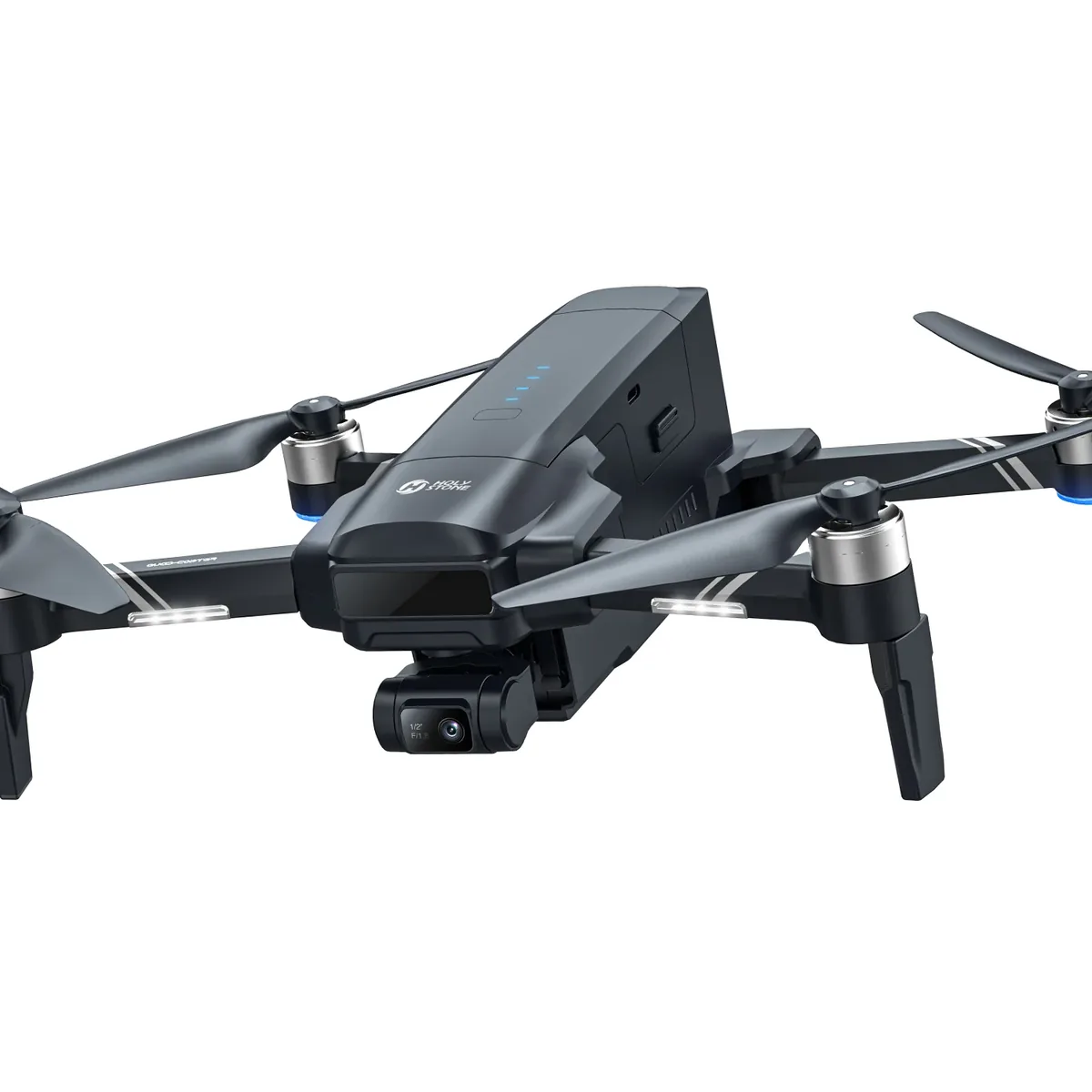
Holy Stone
Holy Stone HS600D
Holy Stone's most ambitious aircraft: a genuine three-axis gimbal, 48MP stills, integrated Remote ID, Level 6 wind resistance and roughly 6 km of transmission, for around $400. Reviewers have called it a clear improvement on everything the brand made before it and still short of the Mini it is priced against. The number to look at hardest is endurance. The box says 40 minutes per battery and 80 across the two included packs; independent reviewers measured 20 to 25 minutes per charge, which is the largest documented gap between a claim and a measurement anywhere in this catalog. Everything else behaves as advertised. At 603 grams you are registering it, taking TRUST and relying on its own Remote ID broadcast. It also arrives with two batteries, a carrying case and a screened controller in the box, which at this price is unusual and is part of why it compares well on paper with drones that charge separately for all three.
- Sensor
- 28.1 mm²
- Claimed
- 40 min
- Base kit
- ~$400
Best for: A three-axis gimbal at budget-brand pricing
Full spec sheet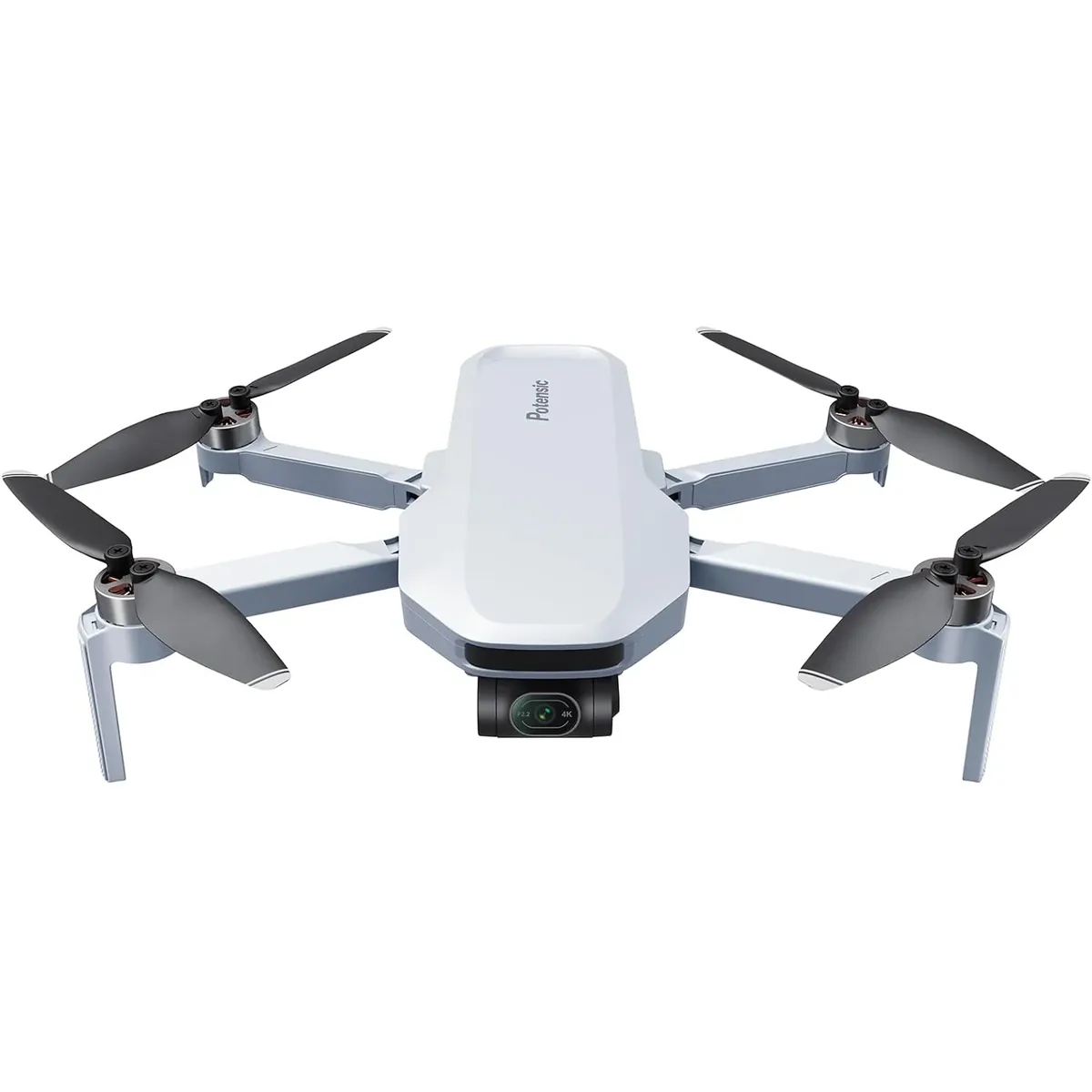
Potensic
Potensic Atom
Before the Atom 2 there was this, and the older model is still worth a look purely on price. Same sub-249-gram airframe, same three-axis gimbal, same GPS return-to-home and QuickShot moves, with a 1/2.3-inch 12MP sensor instead of the newer 1/2-inch 48MP one and PixSync 3.0 capped at 6 km rather than 10. Visual tracking will follow a walking subject or orbit it. What you are giving up against the Atom 2 is sensor area, HDR, vertical shooting and half the rated range — what you are gaining is roughly fifty dollars. For someone whose real question is "will this hold a steady shot without needing registration", the answer here is the same as the newer one, and neither has any obstacle sensing whatsoever.
- Sensor
- 28.1 mm²
- Claimed
- 32 min
- Bundle
- ~$359
Best for: The cheapest stable 4K in the catalog
Full spec sheetHoly Stone
Holy Stone HS720G
A two-axis motorised gimbal plus electronic stabilisation, brushless motors, GPS return-to-home and built-in Remote ID — for a drone that has been on shelves since 2022, the feature list holds up better than the numbers behind it. Range is the giveaway: the controller is rated at roughly a kilometre, a fraction of what the newer sub-250 gram models claim, and there is no obstacle sensing. At 380 grams it also crosses the registration line, which means $5 to the FAA, a TRUST certificate and Remote ID that this aircraft at least provides itself. Two batteries come in the box, which is where the "52 minute" figure on the packaging comes from; a single flight is 26.
- Sensor
- 28.1 mm²
- Claimed
- 26 min
- Base kit
- ~$300
Best for: A first drone where two batteries matter more than range
Full spec sheet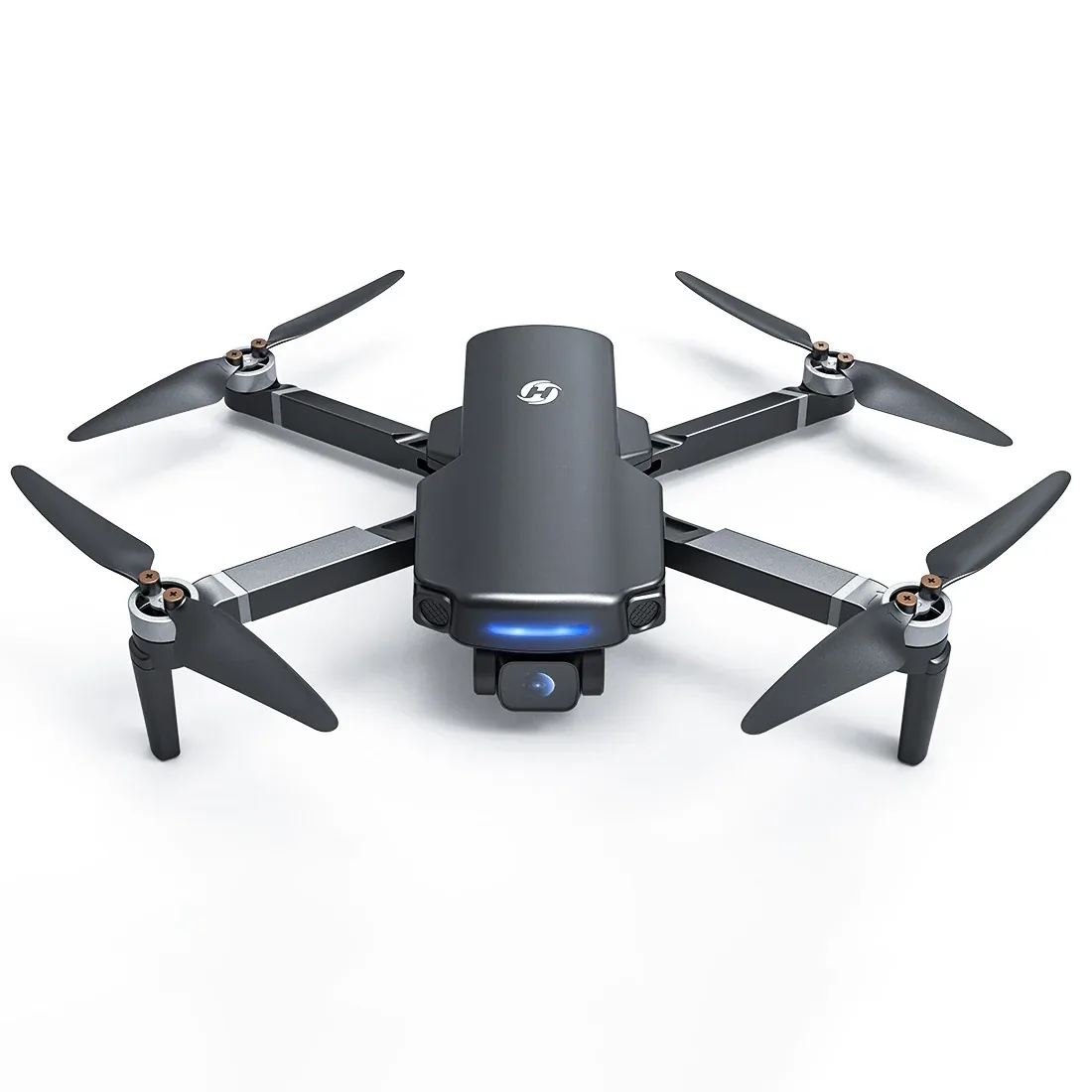
Holy Stone
Holy Stone HS360S
Two hundred dollars, GPS, optical-flow hold for indoor flying, a modular battery and 249 grams on the scale. Read the camera spec twice, though: the 1/3-inch GalaxyCore sensor records 4K at 20 frames per second, which is below the 24fps floor most people consider watchable and well below the 30fps everything else here manages. Stills at 4K resolution are fine. There is no gimbal and no obstacle sensing, and return-to-home fires automatically on low battery or lost link, which is the feature that keeps a first drone out of a tree line. As an aircraft to learn on in an open field before spending real money, it does the job; as a camera, it is the weakest in this catalog.
- Sensor
- 17.3 mm²
- Claimed
- 20 min
- Bundle
- ~$239
Best for: Learning to fly before spending real money
Full spec sheet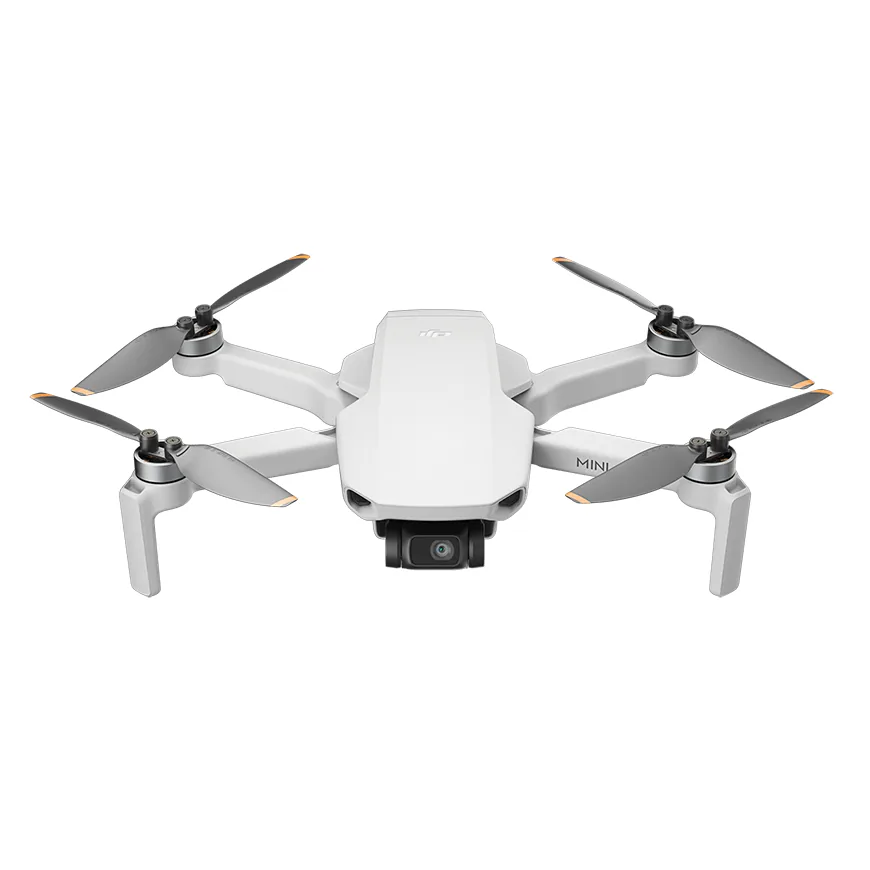
DJI's cheapest way into the ecosystem for two years running, and the model the Mini 4K was built to replace. Identical airframe, identical three-axis gimbal, identical O2 link to 10 km and the same 1/2.3-inch 12MP sensor — the only meaningful difference is that this one stops at 2.7K where the newer one records 4K. Both sit at $299, which makes the choice between them a short conversation unless the Mini 2 SE turns up substantially discounted. Everything that makes a Mini easy is here: GPS hold, automatic return-to-home, Level 5 wind resistance and a weight that keeps it out of the registration system. Everything a Mini lacks at this price is here too, chiefly any obstacle sensing at all.
- Sensor
- 28.1 mm²
- Claimed
- 31 min
- Bundle
- ~$399
Best for: The cheapest DJI, if it is discounted
Full spec sheet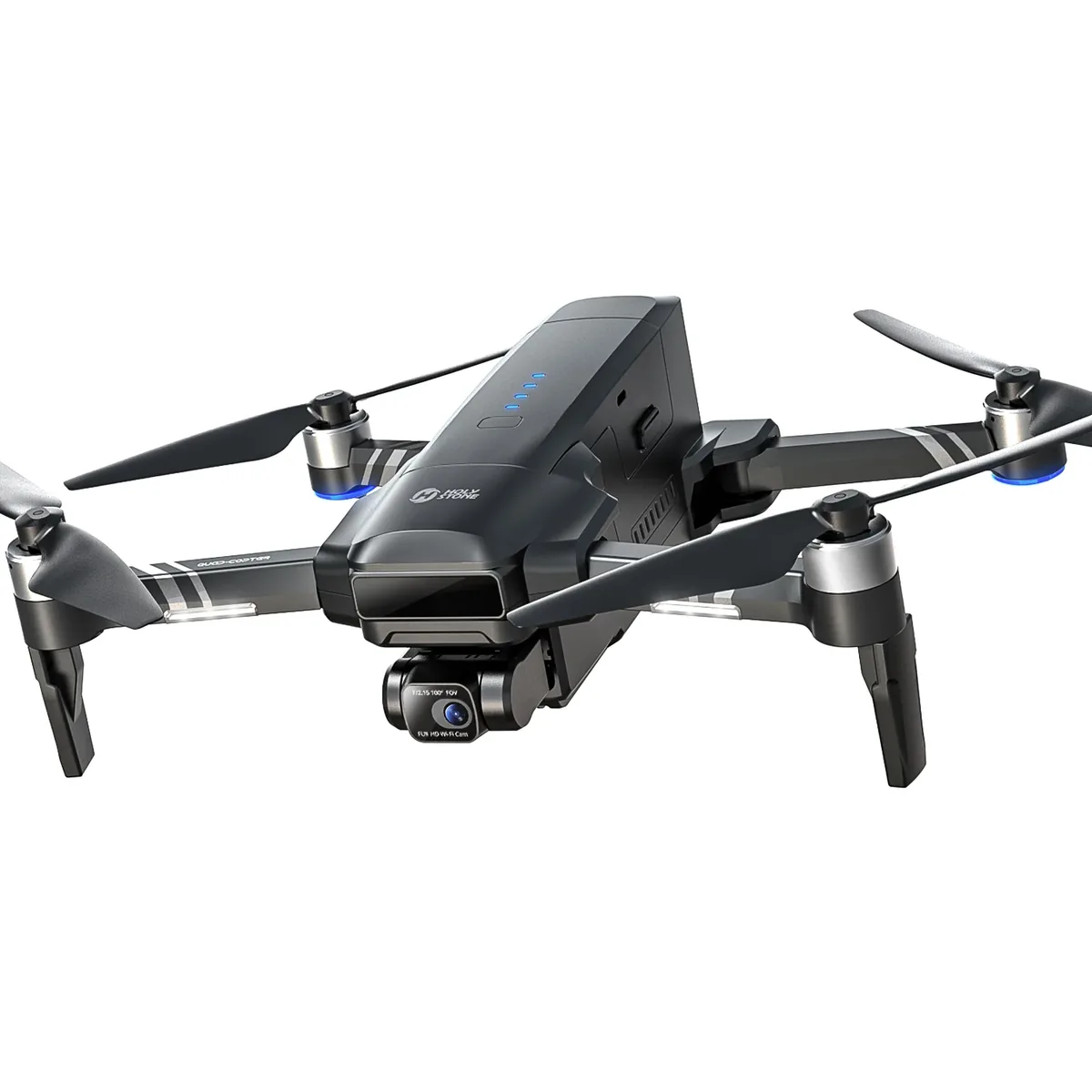
Holy Stone
Holy Stone HS600
Sitting a step below the sub-250-gram HS900 in Holy Stone's range and a step above it in weight, this is the brand's answer for people who want reach rather than a registration exemption. Two-axis gimbal plus electronic stabilisation on the roll axis, a 48MP 1/2.3-inch sensor, integrated Remote ID, Level 6 wind resistance and roughly 6 km of transmission. Two batteries come in the box, which is the source of the 56-minute figure in the listings — a single flight is about 28. At 541 grams the registration, TRUST certificate and Remote ID obligations all apply, and the aircraft at least handles the last of those itself. There is no obstacle sensing, which at this weight and speed is the specification most worth noticing.
- Sensor
- 28.1 mm²
- Claimed
- 28 min
- Base kit
- ~$370
Best for: Range and wind resistance under $400
Full spec sheetHoly Stone
Holy Stone HS900 Sirius
Holy Stone spent years making competent toys and then built this, which is the first of their aircraft that invites comparison with a Mini rather than with a hobby quadcopter. Three-axis brushless gimbal, a 48MP 1/2.3-inch Sony sensor, 6 km of transmission, subject tracking, built-in Remote ID and 249 grams on the nose. Reviewers have been noticeably warmer about it than about anything else in the brand's catalog. The gaps are still real: no obstacle sensing in any direction, a fixed-focus f/2.6 lens, and a measured 22 minutes against a 30-minute claim. At roughly half a Mini 4 Pro's price with a real gimbal and real Remote ID, though, it is the most credible budget alternative here.
- Sensor
- 28.1 mm²
- Claimed
- 30 min
- Bundle
- ~$420
Best for: The best-equipped sub-$400 camera drone
Full spec sheet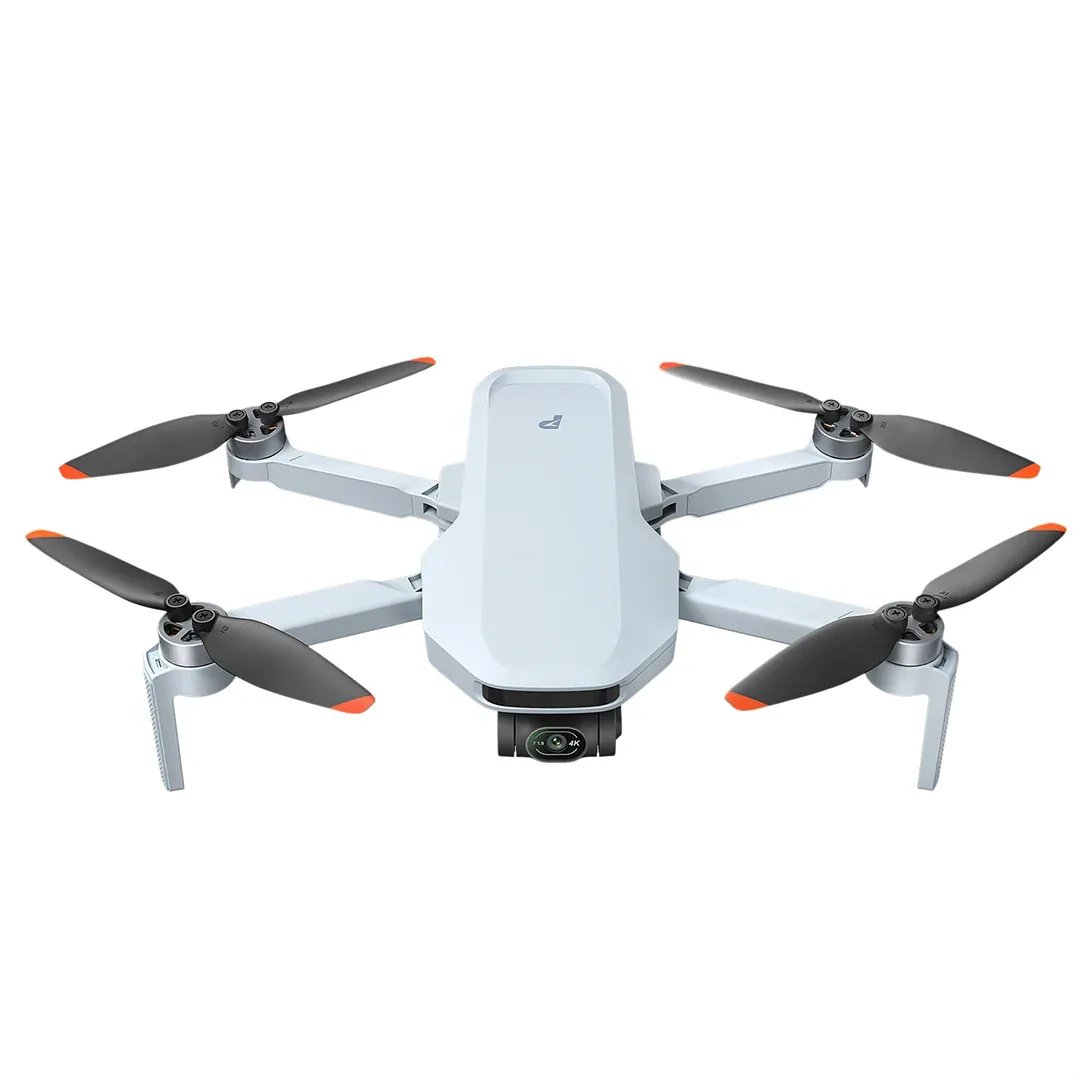
Potensic
Potensic Atom 2
Potensic's pitch is simple arithmetic: a three-axis gimbal, a 10 km link, waypoints and subject tracking for the price DJI charges for a Mini 4K with none of those things. The 1/2-inch 48MP sensor is genuinely smaller than the Mini's 1/1.3-inch chip, so the footage is a step behind in anything but good light, but the stabilisation is real and vertical shooting is supported. The flight-time claim is where this entry earns its place in the catalog: the box says 32 minutes, a reviewer could not get past 20 on any flight, and Potensic's own spokesperson put typical real-world endurance at around 20 minutes. That is the most clearly documented gap between claim and reality anywhere in this dataset, and it is worth knowing before you plan a session around three batteries. Two things to check before ordering: whether the Fly More bundle is genuinely cheaper than buying batteries later, because the discount varies week to week; and whether you need the screened RC PTD 1 controller, because the base kit's controller needs your phone and your phone's battery.
- Sensor
- 30.7 mm²
- Claimed
- 32 min
- Bundle
- ~$449
Best for: A gimballed first drone on a tight budget
Full spec sheet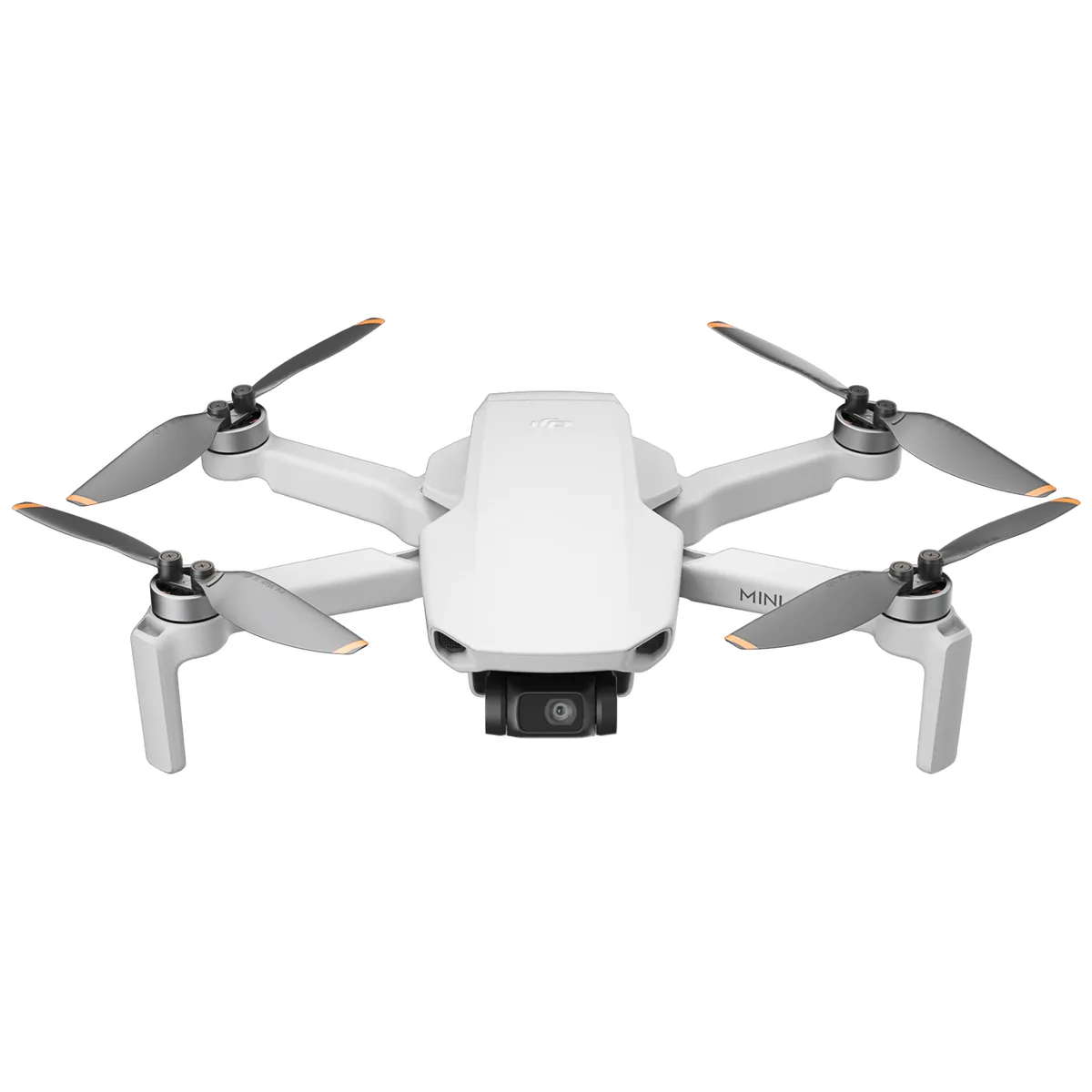
DJI
DJI Mini 4K
Three hundred dollars is the entire point here. Strip a Mini down to a 1/2.3-inch 12MP sensor, 8-bit 4K/30, and a downward vision system with nothing looking forward, keep the three-axis gimbal and the GPS return-to-home, and you get the cheapest genuinely stable aerial camera DJI sells. Nothing about the footage will impress anyone who has seen a 1/1.3-inch sensor at dusk, but in daylight it is sharp and level, which is more than any sub-$200 quadcopter manages. O2 transmission is rated to 10 km and holds a 720p feed rather than O4's 1080p. Treat the lack of obstacle sensing as the defining spec: this aircraft will fly into a branch at full speed without hesitating, so it belongs in open fields while you learn.
- Sensor
- 28.1 mm²
- Claimed
- 31 min
- Bundle
- ~$449
Best for: A first drone flown in open space
Full spec sheet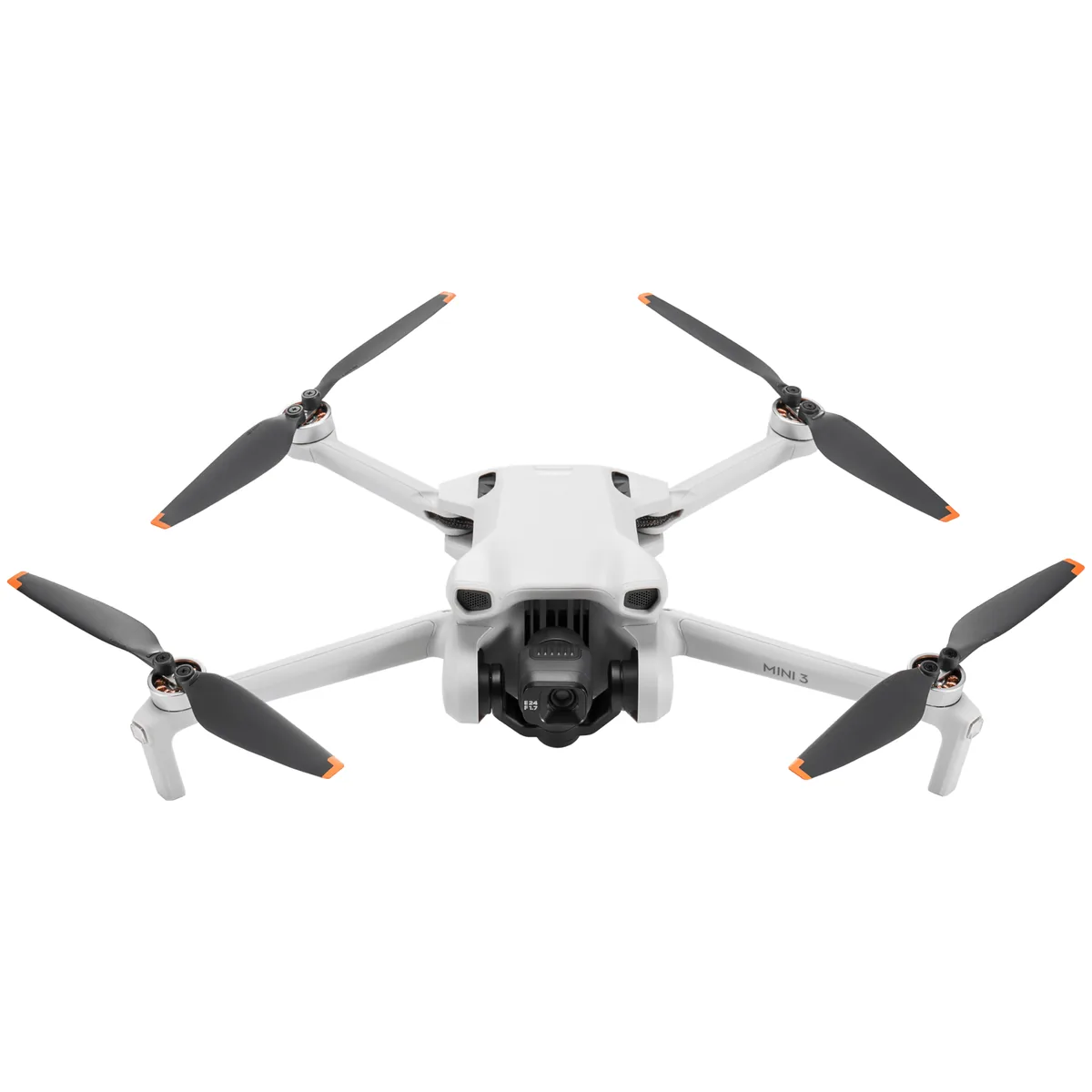
DJI
DJI Mini 3
Everything the Mini 4 Pro has except the sensing and the frame rates, for a good deal less money. Mini 3 carries the same 1/1.3-inch 48MP sensor, the same three-axis gimbal and the same true vertical shooting, then stops at 4K/30 in 8-bit with no log profile and no obstacle detection beyond the downward vision system. Its 38-minute headline is the most quotable example of why this site records flight conditions: DJI measures it hovering in a windless lab, in photo mode, running the battery from full to empty. Fly it forward with the camera rolling and land with a reserve and you are in the mid-twenties. As a daylight stills and simple-video aircraft that never needs registering, it still holds up; as a drone to fly through anything, it does not. There is one more consideration for anyone comparing it against a Mini 4K at a similar price: the Mini 3 has been out long enough that the accessory market is deep and second-hand batteries are plentiful, while the newer aircraft is still building that.
- Sensor
- 69.1 mm²
- Claimed
- 38 min
- Bundle
- ~$598
Best for: Daylight stills and simple video with no registration
Full spec sheet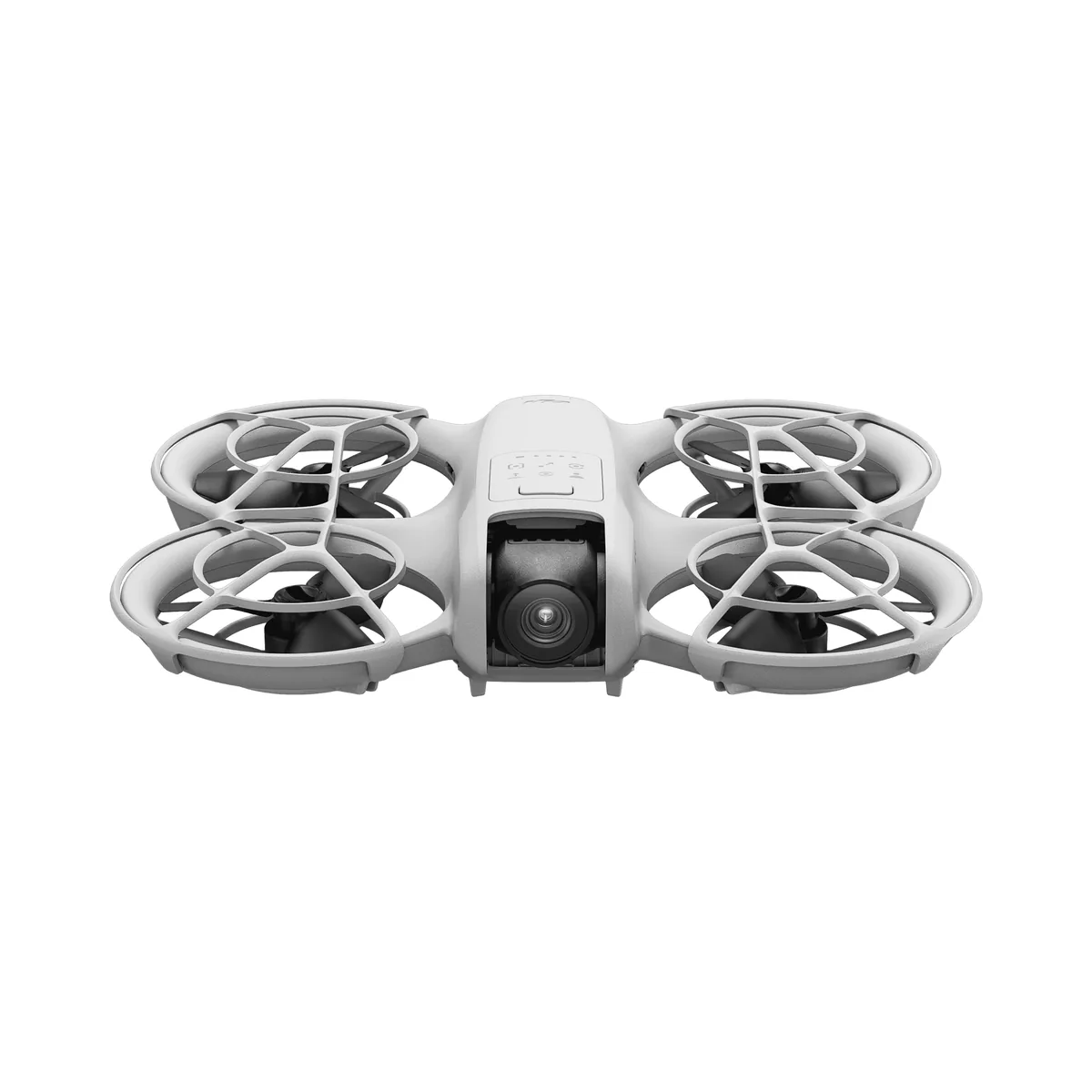
DJI
DJI Neo
At 135 grams with the propellers already caged, this is the drone you hand to someone who has never flown one. It launches off a palm, picks a preset move — orbit, follow, dronie — flies it, and lands back on the hand, with no controller and no app interaction required. A single-axis gimbal and electronic stabilisation keep 4K/30 usably steady, and 22 GB of internal storage means there is no card to forget. The trade is total: there is no obstacle sensing, the Wi-Fi link is good for about 50 metres without the optional controller, and the 18-minute claim is measured crawling forward at 2 m/s. Think of it as a hovering camera with eight fixed moves, not a camera drone you compose with.
- Sensor
- 30.7 mm²
- Claimed
- 18 min
- Bundle
- ~$289
Best for: Hands-free follow shots without piloting
Full spec sheet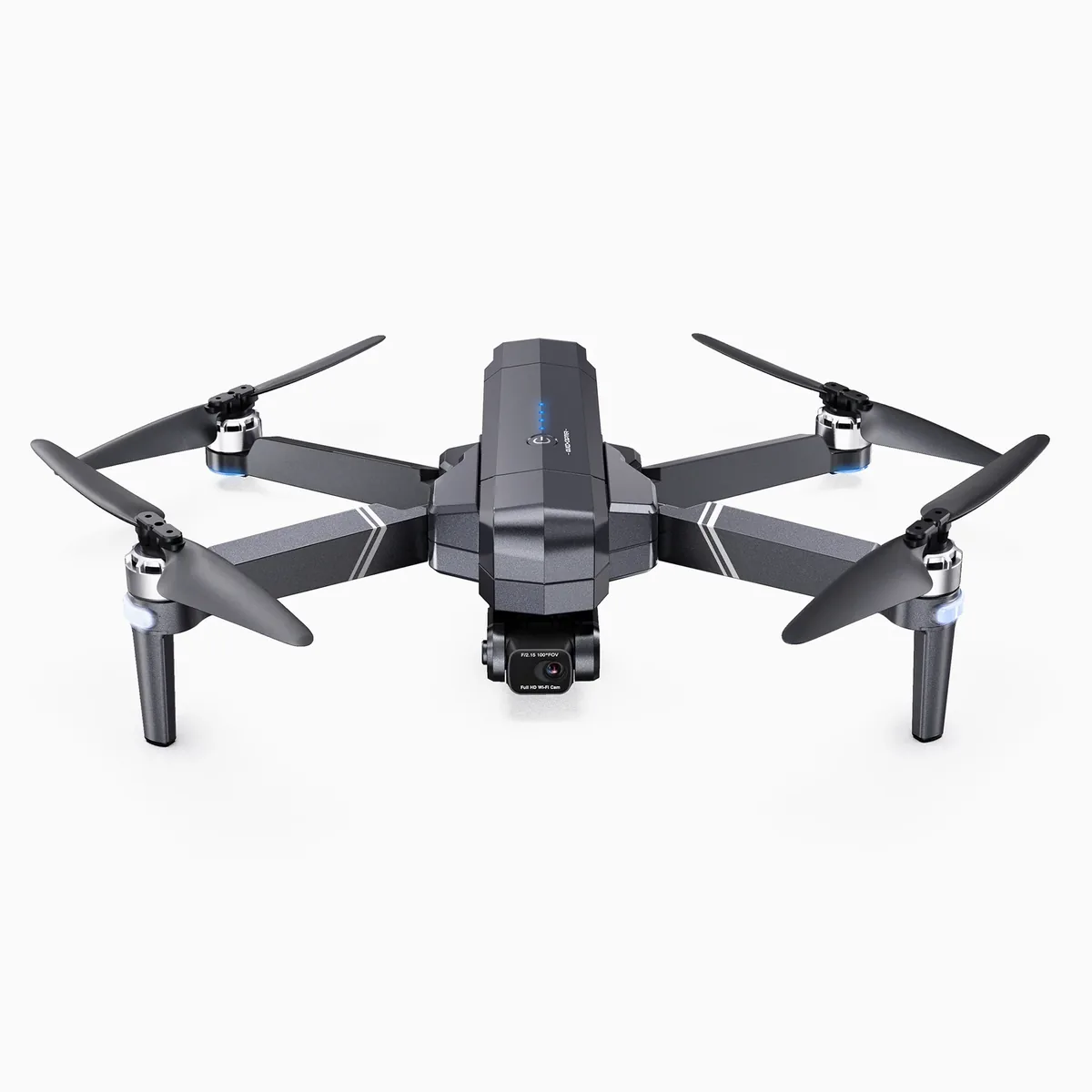
Ruko
Ruko F11GIM2
Ruko's flagship pairs a two-axis mechanical gimbal with electronic stabilisation on the third axis, which is a sensible compromise that the marketing then describes as "3-axis". Read the listings carefully and you will find both claims on the same page. The rest is solid enough: 48MP stills, 4K/30, roughly 5 km of transmission, Level 6 wind resistance and two batteries as standard. At 585 grams it is well over the registration line, so budget for the $5 FAA registration and a TRUST certificate, and check whether the unit you buy broadcasts Remote ID, because Ruko does not state it. The flight-time marketing is the usual pattern — a "64 minute" headline that is two packs added together, from a maker who quotes 28 per pack.
- Sensor
- 28.1 mm²
- Claimed
- 28 min
- Base kit
- ~$450
Best for: Windy days on a budget, if you don't mind registering
Full spec sheet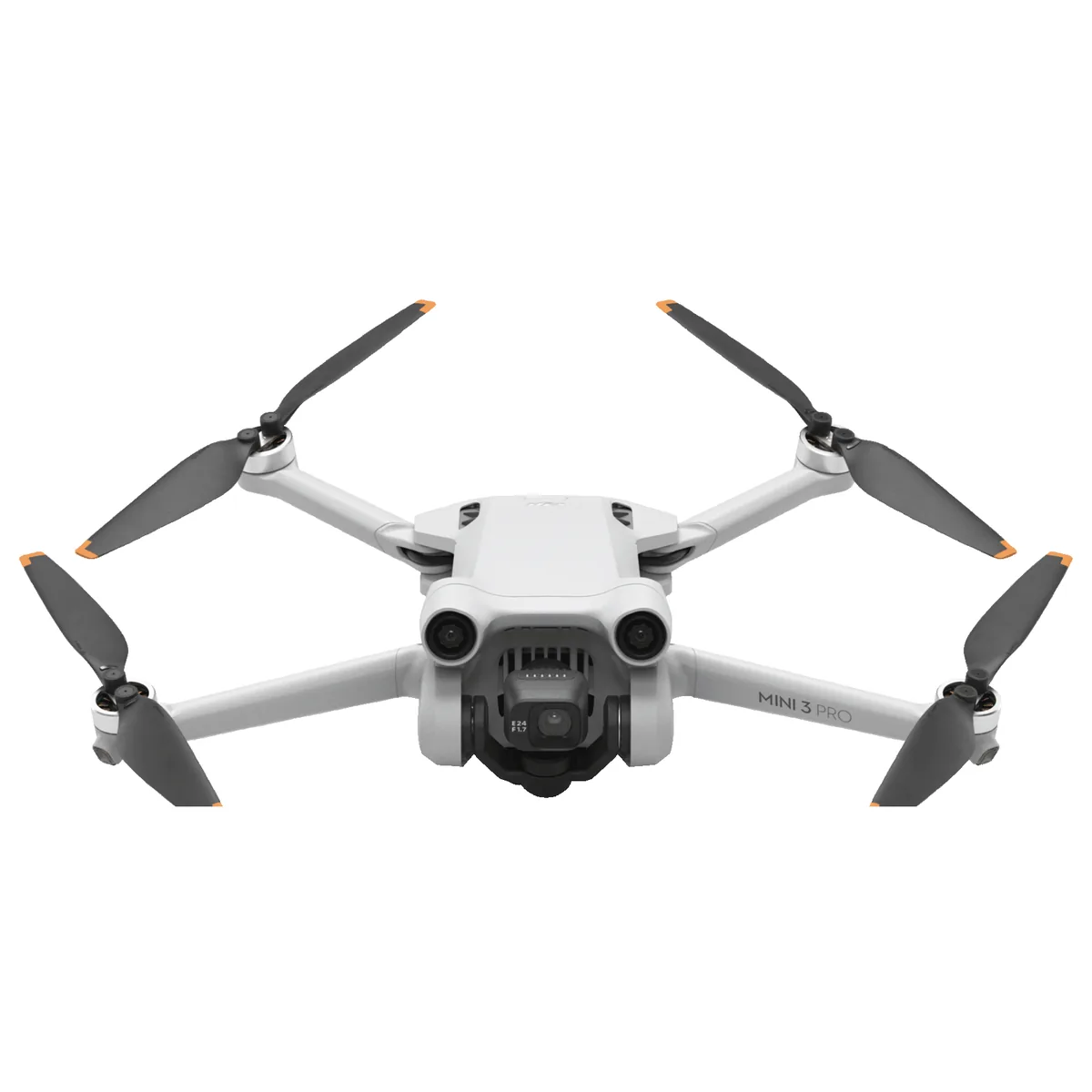
This was the aircraft that made obstacle sensing possible under 250 grams, and everything in the Mini line since has built on it. Forward, backward and downward sensors, a 1/1.3-inch 48MP sensor that rotates 90 degrees for true vertical shooting, 4K/60 HDR at 150 Mbps in 10-bit D-Cinelike, and a genuine 34 minutes on the standard pack. What the Mini 4 Pro added two years later was sensing on the remaining sides, O4 in place of O3, and 4K/100 slow motion. If you find one at a real discount the older aircraft still does most of the job, but DJI discontinued it in 2024, so you are shopping for the last of the stock and betting on battery availability a few years out.
- Sensor
- 69.1 mm²
- Claimed
- 34 min
- Base kit
- ~$759
Best for: Sensing under 250 g at a discount
Full spec sheet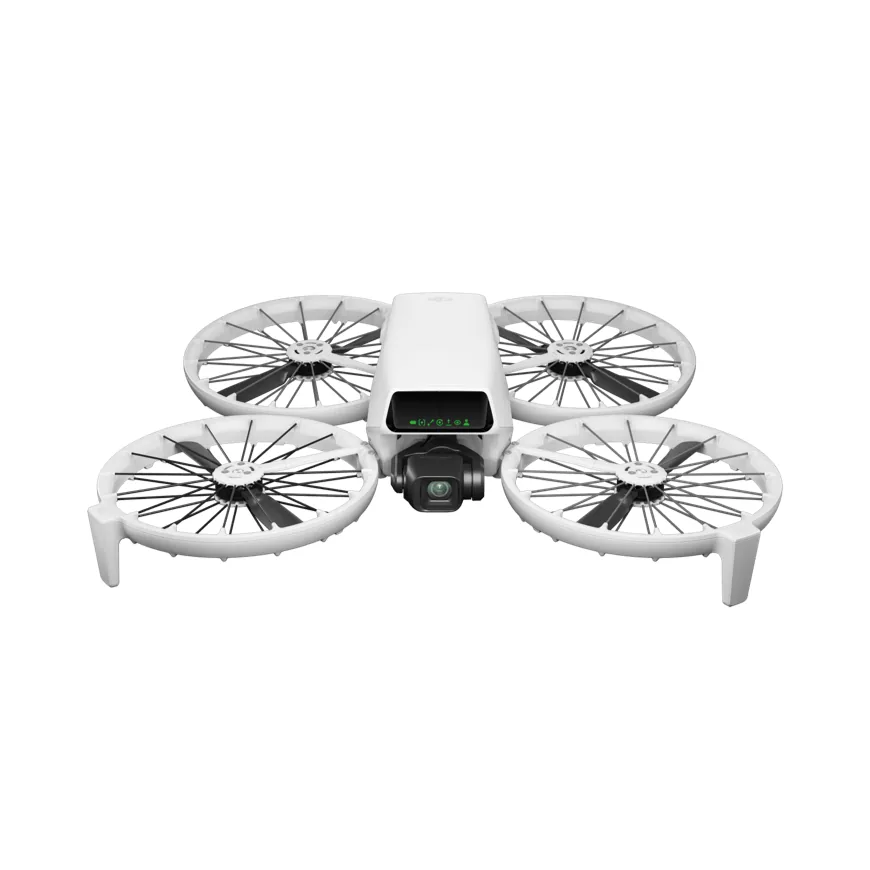
DJI
DJI Flip
Full-coverage propeller guards that fold flat is the idea, and it is a better one than the spec sheet suggests. Unfolded, the Flip's four cages sit around the props like a Neo's but carry a proper 1/1.3-inch 48MP camera on a three-axis gimbal behind them; folded, the whole thing collapses to something close to a Mini's footprint. It will take off from a palm and fly a preset without a controller at all, and it will also fly properly on an RC-N3 with 10-bit D-Log M and O4 transmission. Forward 3D infrared sensing covers the direction you are most likely to hit something and nothing else, which is an honest middle ground between the Neo's nothing and the Mini 4 Pro's everything. The bundle pricing is the awkward part — the screened-controller combo costs nearly twice the base kit.
- Sensor
- 69.1 mm²
- Claimed
- 31 min
- Bundle
- ~$779
Best for: Flying safely around people with a real camera
Full spec sheet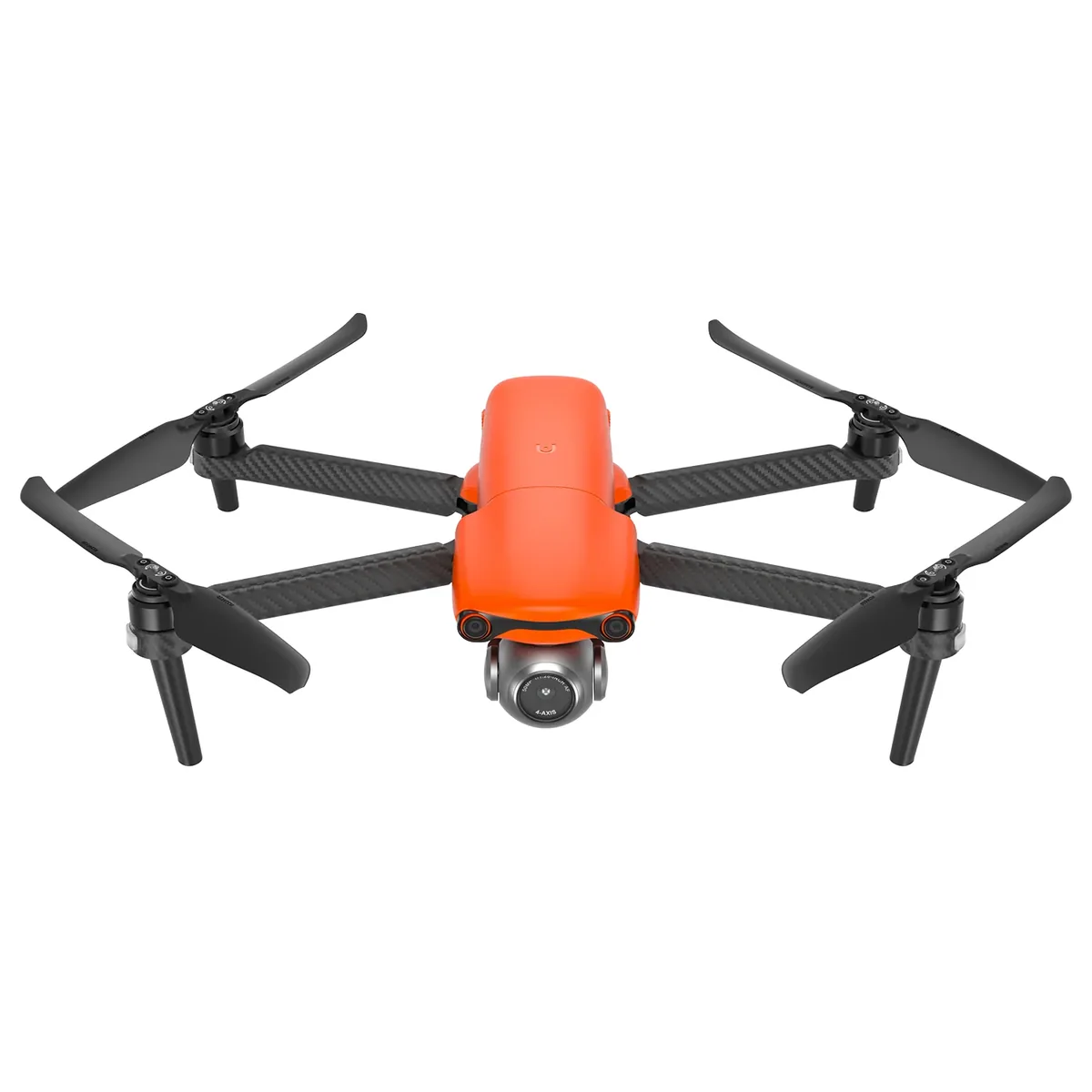
Autel
Autel EVO Lite
Same airframe as the EVO Lite+, different camera, and the difference cuts both ways. Where the plus model carries a one-inch 20MP sensor with a mechanical aperture and 6K recording, this one has a 1/1.28-inch 50MP chip that records 4K at 60 frames per second — half the sensor area, twice the frame rate, and a lot more resolution for stills. For anyone whose output is 4K60 rather than 6K, that is a reasonable trade at a couple of hundred dollars less. Everything structural is shared: 835 grams, 40 claimed minutes, 12 km of SkyLink, forward and backward sensing, and no manufacturer geofencing. So is the problem — Autel ended its consumer line in July 2025, and this is what remains on shelves.
- Sensor
- 71.5 mm²
- Claimed
- 40 min
- Base kit
- ~$1,149
Best for: 4K/60 and 50MP stills without DJI
Full spec sheet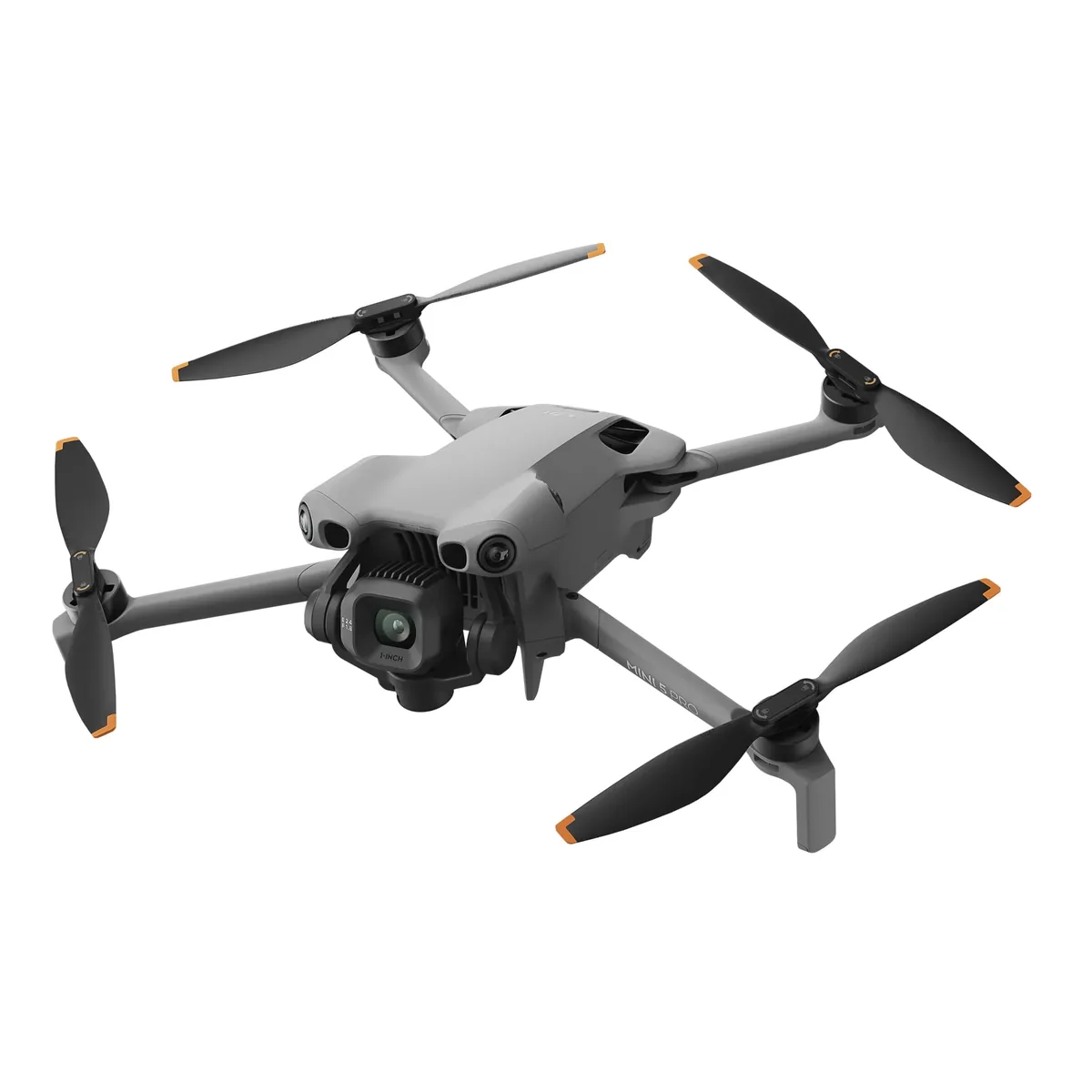
A one-inch sensor under 250 grams was supposed to be impossible, and this is the drone that did it. Fifty megapixels on a 116 mm² sensor at f/1.8 is roughly two-thirds more light-gathering area than the Mini 4 Pro's 1/1.3-inch chip, which shows up exactly where you would expect: dusk, interiors of shadow, and anything where the smaller Minis start smearing. It adds forward LiDAR to the omnidirectional vision system, so it sees in the dark rather than just in daylight, and the gimbal swings through 225 degrees for true vertical framing. The complication is where you buy it. DJI never put it in its own US store, and the units on US shelves arrived through import channels, which changes what happens when you crash it.
- Sensor
- 116.2 mm²
- Claimed
- 36 min
- Bundle
- ~$1,043
Best for: Low light and vertical video without registering
Full spec sheet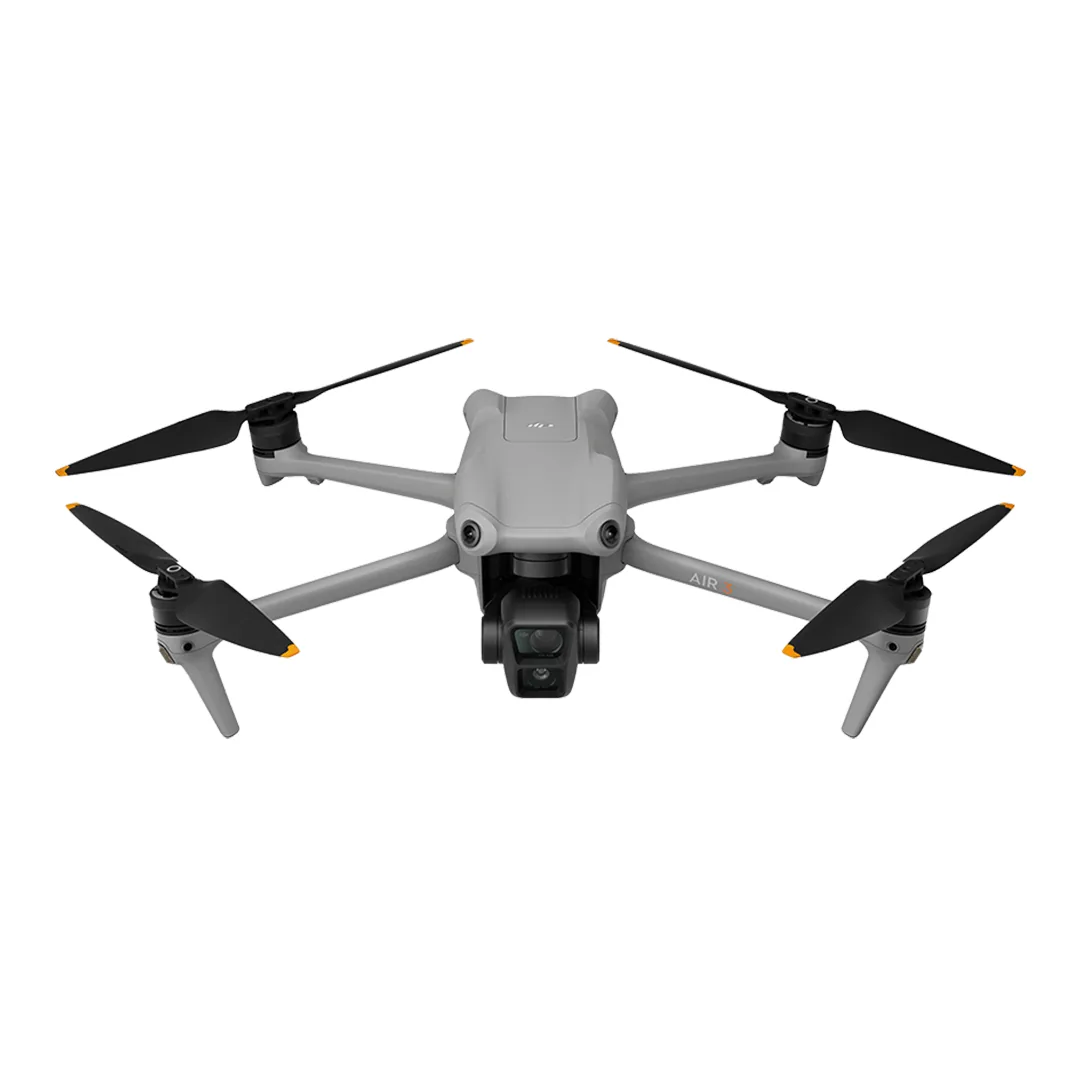
DJI
DJI Air 3
Two 1/1.3-inch cameras rather than one big one was the Air 3's bet, and for a lot of people it paid off. A 24mm wide and a 70mm medium telephoto share the same sensor size and the same 48 megapixels, so cutting between them does not produce the jarring quality drop that a small tele sensor causes. Both shoot 4K/60 HDR, 4K/100 slow motion and 10-bit D-Log M. Omnidirectional sensing, 46 claimed minutes on a 62.6 Wh pack and a 6,000 m ceiling make it the class workhorse it was meant to be. Read that 46 carefully, though: DJI quotes it with obstacle sensing switched off and the camera set to 1080p/24, which is not how anyone flies. The Air 3S replaced it with a one-inch wide camera and forward LiDAR, so the Air 3 is now the value pick in the line rather than the current one.
- Sensor
- 69.1 mm²
- Claimed
- 46 min
- Bundle
- ~$1,349
Best for: Long flights with two usable focal lengths
Full spec sheet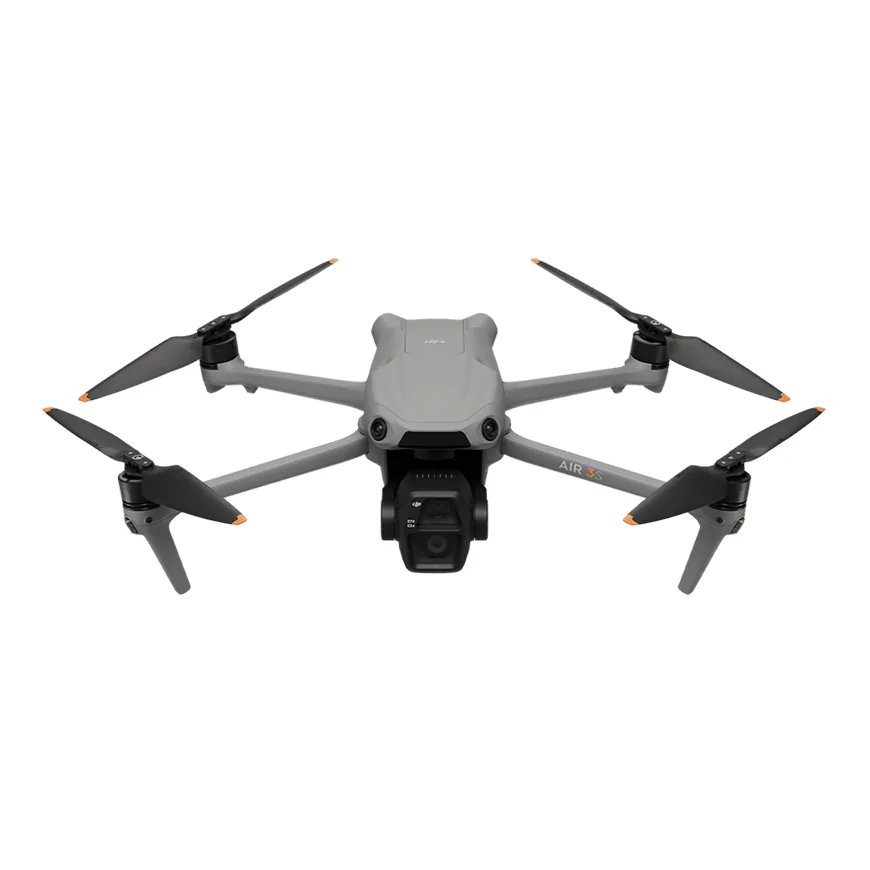
DJI
DJI Air 3S
Where the Air 3 gave you two matched 1/1.3-inch cameras, the Air 3S puts a one-inch 50MP sensor on the wide and keeps a 1/1.3-inch 48MP for the 70mm tele. That is the upgrade almost everyone wanted, and it comes with forward LiDAR bolted onto the omnidirectional vision system, which is the first time DJI's sensing has genuinely worked after dusk. Forty-two gigabytes of internal storage, a 6,000 m ceiling and 12 m/s wind resistance round it out. It sits in a strange spot in 2026: it is the best all-round camera drone DJI has FCC clearance to sell in the US, and the Mavic 4 Pro that beats it never officially arrived here. If you want one aircraft that handles wind, low light and long flights without a caveat, this is the shortest answer in the catalog.
- Sensor
- 116.2 mm²
- Claimed
- 45 min
- Bundle
- ~$1,399
Best for: One aircraft for wind, low light and long flights
Full spec sheet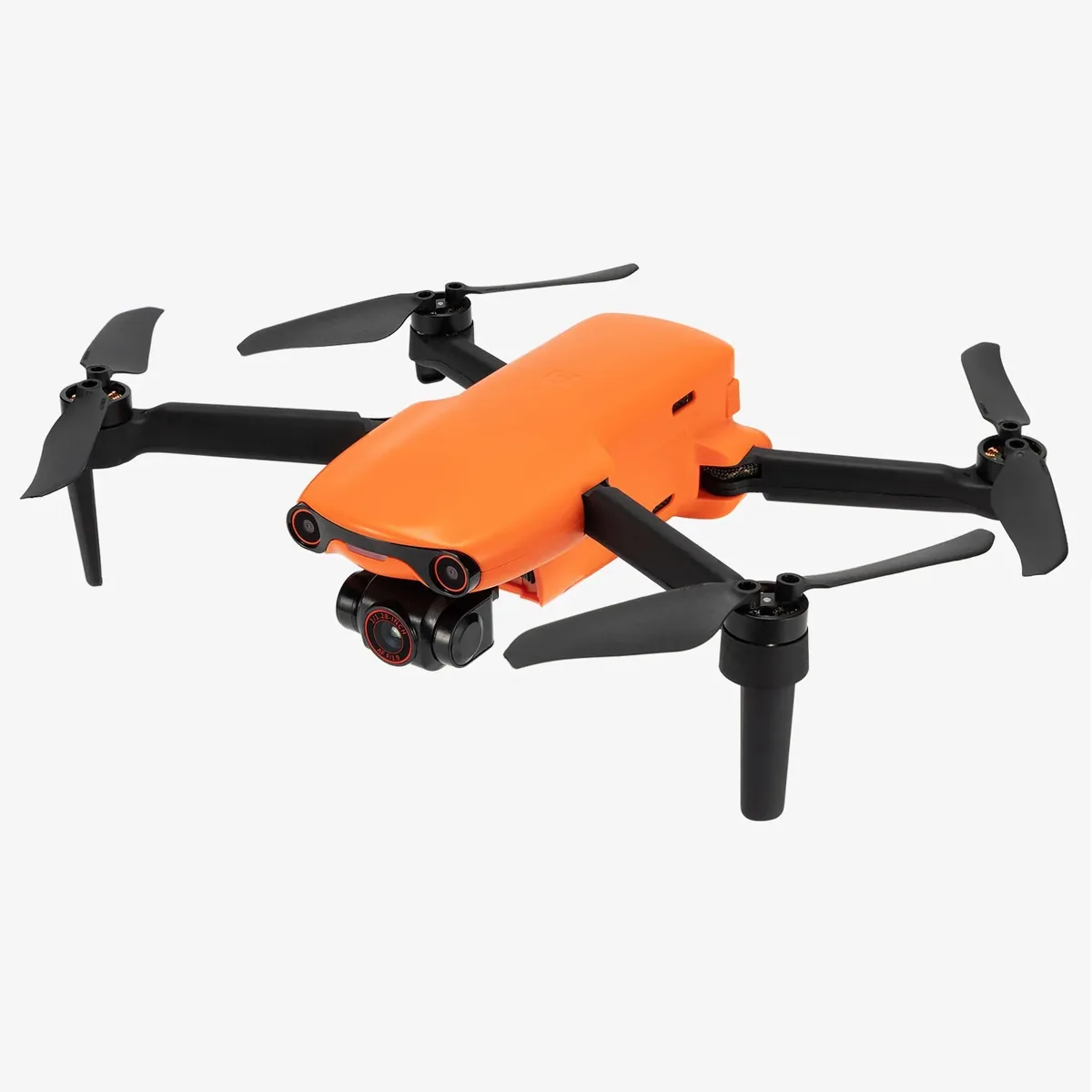
Autel
Autel EVO Nano+
For a couple of years this was the answer to "what if I don't want a DJI", and its selling point has not changed: 50 megapixels on a 1/1.28-inch sensor, three-axis stabilisation, three-way obstacle sensing and no geofencing, all under 249 grams. Autel has never locked its aircraft out of airspace the way DJI does, which some pilots consider the entire reason to buy one and which puts the responsibility for knowing where you may fly squarely on you. Video tops out at 4K/30 in 8-bit with no log profile, so this is a stills-first aircraft. The complication is corporate rather than technical: Autel ended production of the whole Nano and Lite line in July 2025, so you are buying remaining inventory from a company that has left the consumer market, with service promised to 2030. One practical note for anyone coming from DJI: the absence of geofencing means the aircraft will take off anywhere it has satellites, including places you must not fly. That is either the reason you are buying it or the reason you should not, and it is worth deciding which before the first flight rather than after.
- Sensor
- 71.5 mm²
- Claimed
- 28 min
- Bundle
- ~$899
Best for: 50MP stills from a non-DJI aircraft
Full spec sheet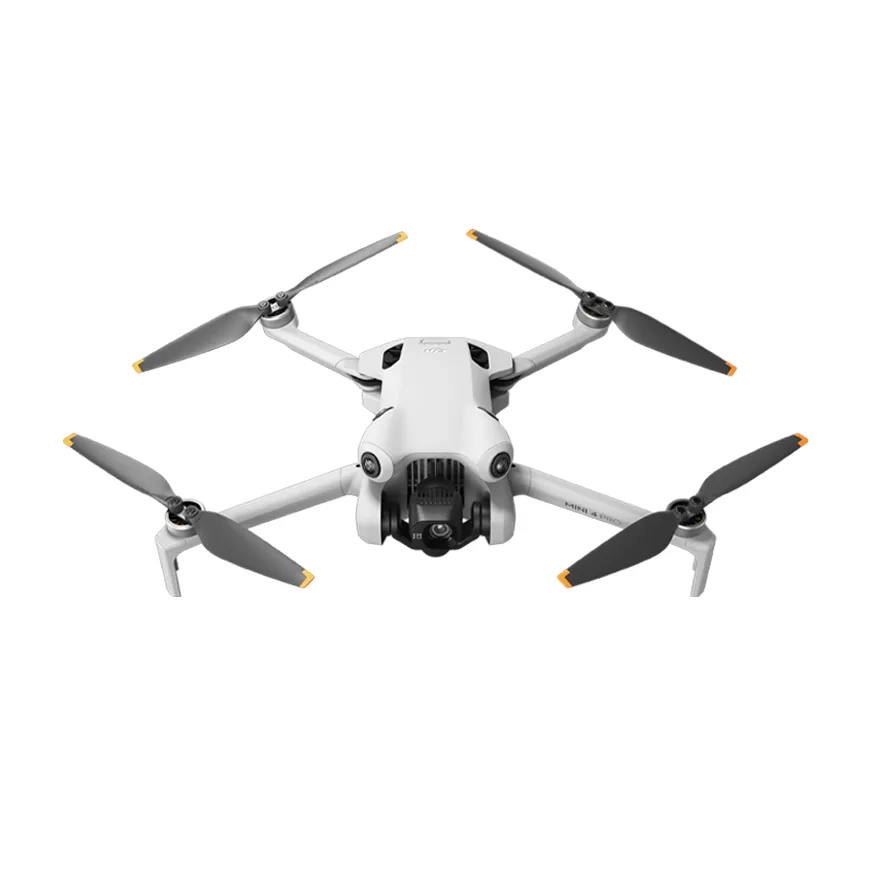
Omnidirectional sensing on a 249-gram airframe is the trick nothing else in this catalog fully matches. Binocular vision on all sides plus a downward 3D infrared sensor means the Mini 4 Pro will stop for a branch it is backing into, which matters far more than it sounds once you fly near trees. The 1/1.3-inch 48MP sensor records 4K/60 HDR and 4K/100 slow motion at 150 Mbps in 10-bit D-Log M, so the footage grades rather than just plays. O4 transmission is rated to 20 km in FCC regions, which is far beyond any legal line-of-sight flight but does mean a clean 1080p feed at the distances people actually fly. The caveat is the one everyone trips on: the 45-minute battery is a separate, heavier pack that takes the aircraft over the registration threshold, so the honest number for a registration-free flight is 34 minutes.
- Sensor
- 69.1 mm²
- Claimed
- 34 min
- Bundle
- ~$1,099
Best for: Flying near trees and buildings without registering
Full spec sheetWhat people ask before the first one arrives
The questions that come up over and over in owner discussions, answered without the hedging.
Which drones can I fly without registering with the FAA?
Anything under 250 grams, flown recreationally. That is the whole rule, and it is why so many drones weigh exactly 249 grams — the makers are designing to a legal threshold, not to an engineering one. 25 of the 41 aircraft in this catalog are under it. Registration itself is cheap when you do need it ($5, three years) but it comes with Remote ID, which is the part people find genuinely annoying: a drone that has to be registered also has to broadcast its identity and position, either from built-in hardware or from a module you bolt on. Registration and Remote ID, in full →
Why does my drone never get close to its advertised flight time?
Because the number is measured under conditions nobody flies in. DJI quotes the Mini 3 at 38 minutes hovering in a windless lab in photo mode, running the battery from full to flat. It quotes the Air 3 at 46 minutes cruising at 28.8 kph with obstacle sensing off and the camera set to 1080p/24. At the budget end the headline is often two batteries added together. Expect roughly 60 to 75 per cent of a claim in real flying, and land with a reserve. Every flight-time figure on this site is printed with the conditions the maker quoted it at. What the claims actually measure →
Is it a bad idea to buy a DJI drone right now?
A DJI drone you buy today is legal to own and legal to fly, and nothing is being remotely disabled. What has changed is supply. US Customs has been detaining DJI shipments since October 2024, and the FCC added the company to its Covered List on 23 December 2025, which blocks the equipment authorisation new models need before they can be imported and sold. Models authorised before that date can still be sold from stock. The Mavic 4 Pro and the Neo 2 were never launched here at all. Each DJI entry in this catalog carries a dated note on where its US availability actually stands. The full timeline, and the alternatives →
How much does obstacle sensing actually matter?
More than any camera spec on your first drone. 23 of the 41 aircraft here have none at all, and a downward vision camera — which almost everything has — is positioning, not sensing: it will hold a rock-steady hover and then fly straight into a branch at full speed. Sensing runs in tiers, from forward-only, through forward-and-backward, to omnidirectional, to omnidirectional with a LiDAR unit that still works after dark. 3 drones here have that last tier. The sensing tiers explained →
What does sensor size mean, and why is it not megapixels?
Sensor area decides how much light the camera collects, and low-light footage is mostly a function of area. Megapixels decide how finely that light is divided up. A 48-megapixel 1/2.3-inch chip has about 28 square millimetres of surface; a 20-megapixel Four Thirds chip has about 225. The bigger sensor with fewer megapixels will beat the smaller one at dusk every time. This site converts every optical format to square millimetres so the comparison is visible rather than implied. The optical-format table →
Where can I legally fly?
Below 400 feet, within your visual line of sight, in uncontrolled airspace, away from crewed aircraft. Controlled airspace near an airport needs authorisation, which for most recreational flights is an instant LAANC approval through an approved app. National Park Service land bans launching and landing outright, and temporary restrictions appear around wildfires and major events with very little notice. Every recreational flyer also has to take TRUST, which is free and online, and carry proof of it. Airspace, LAANC and property →
Do I need a controller, or can I fly from my phone?
You can fly several of these from a phone, and you will regret it past about fifty metres. Wi-Fi links are short and lose the feed before the aircraft is out of sight. A physical controller with a dedicated transmission system is the difference between a toy radius and a usable one — and on the cheapest aircraft here it is a separate purchase that can double the price of the kit. 37 of the 41 drones in this catalog include one in the base box. Kits that include a controller →
What is the cheapest way into FPV?
A complete ready-to-fly kit, because the goggles and the radio are the expensive, long-lived half of an FPV setup and a bind-and-fly quad includes neither. Kits here start around $160 for a 35-gram brushed whoop with goggles, a transmitter, batteries and a charger in the box. The radio doubles as a simulator controller over USB, which is where most of the practice that matters actually happens. What an FPV setup really costs →
Are the crash-cover plans worth buying?
If you are new, or you fly close to obstacles, or the aircraft cost more than about a thousand dollars, usually yes — one incident covers the premium. If you are experienced and flying open ground with a cheap airframe, usually not. Read whether flyaway replacement is included, because that is the failure that loses the whole aircraft rather than a gimbal. And note that these plans are tied to the region of purchase, so an imported drone may not be covered at all. What the plans cover →
What actually causes a flyaway?
Almost never the radio. It is usually the compass — launching from a car roof, a manhole cover or reinforced concrete distorts it and the aircraft turns of its own accord — or a home point recorded before the GPS fix settled. A third cause catches people out: some aircraft triggering return-to-home within about fifty metres of the pilot fly home at their current altitude instead of climbing first, which is how a drone that was behaving perfectly ends up in a tree. The failure modes, and the pre-flight →